It’s Time to Revisit No Silver Bullet Part II
In Part I, I argued it’s time to revisit No Silver Bullet. Here I want to take on the central piece of Brooks’s argument, essentially Amdahl’s law for software:
“All of the technological attacks on the accidents of the software process are fundamentally limited by the productivity equation:
Time of task = Σi ( Frequencyi × Timei )
If, as I believe, the conceptual components of the task are now taking most of the time, then no amount of activity on the task components that are merely the expression of the concepts can give large productivity gains.”
Point solutions speed up one term; the untouched terms cap you. AI is the first advancement that can accelerate work across the entire equation. Here’s what that looks like on one feature at Alt.
Recently we wanted to add songs to Alt, and we were fortunate enough to get early access to Suno’s API. Bringing music to our users and platform was a number of steps:
- Get the skeleton of the API working (copy and paste the docs into Claude, hey Claude make me a tool to call their API)
- Experiment with the API and with making music (hey Claude change my tool so I can try every feature)
- Connect music to our product. We already have rich characters and images; I wanted to give them backing music, bring them to life (hey Claude write lyrics based off the character and what the user asked for, then make the song)
- Put it together: an image over the song, with animated captions (research forced alignment tools and pay for one, hey Claude use this service for alignment, then generate a video with the animated overlay)
- Hook it into Alt properly. We already have async jobs for images (hey Claude add a song job type, tables for songs like we have for images, and link them to the images)
- Show it to the user: a webpage where the song lives (hey Claude build a simple page that streams the song with captions, tracks plays, and has its own image, which means more storage and schema updates)
- Make it look good in iMessage and WhatsApp: per-song OG images (Claude GO!)
Most of these steps are dominated by what Brooks would call accidents: the work of expressing a concept once you know what you want. Each one is a meaty feature, but instead of days or weeks they took hours to build. Brooks expected real improvements here. The more interesting question is what happened to #3, where we were still figuring out what the product should actually do. I’ll come back to it.
Brooks’s equation assumes the task is fixed. But when the plumbing gets cheap enough, you don’t just finish the same task faster — you imagine what else you can build too.
Songs were working, Ajay saw one and said “oh, oh, can you put captions on there?” and I said sure. Pre-AI the answer would have been “not for v1”. And if I had built them anyway, I would have been rightly chastised for gilding the lily; instead, with AI, creative doors opened that would have just been too expensive to walk through.
Now #3. Brooks didn’t think tools were useless against conceptual work. In fact, one of the attacks on essential complexity he was most excited about was rapid prototyping: you often can’t know the right specification until you’ve tried versions of it.
That’s exactly what we were doing. What should it mean to turn an Alt into a song? What makes the lyrics feel like the character instead of generic AI output? Here’s one. It’s hard to know if the result is good, and harder to know if the prompt that produced it is good. This is the hard part of building consumer products: you experiment, you evaluate, you develop a feel. At Spotify, working on recommendations, this was our bread and butter — build evaluation tools so we could try different playlists, feel them, collect feedback. But building those exploratory tools was expensive. Real engineering time went into them, just so we could try different algorithms. Here, the tooling cost me almost nothing. I could try 10 prompts across 20 Alts, have an LLM pre-screen against my criteria, and spend my own attention on a small candidate set. The lyrics prompt work took less than a day.
The essential complexity didn’t disappear. The judgment still mattered: we had to try things, listen, decide what worked, and develop a feel for the product. But the cost of generating candidates and building the machinery to evaluate them dropped to close to nothing.
This whole feature took days. Pre-AI it would have been weeks, with less in it and less polish. And users love it; they can’t stop turning their Alts into songs.
Every term in Brooks’s equation got cheaper. Not because the essential judgment disappeared, but because the cost of exploring it collapsed.
Brooks was already betting on rapid prototyping. AI made prototyping nearly free.
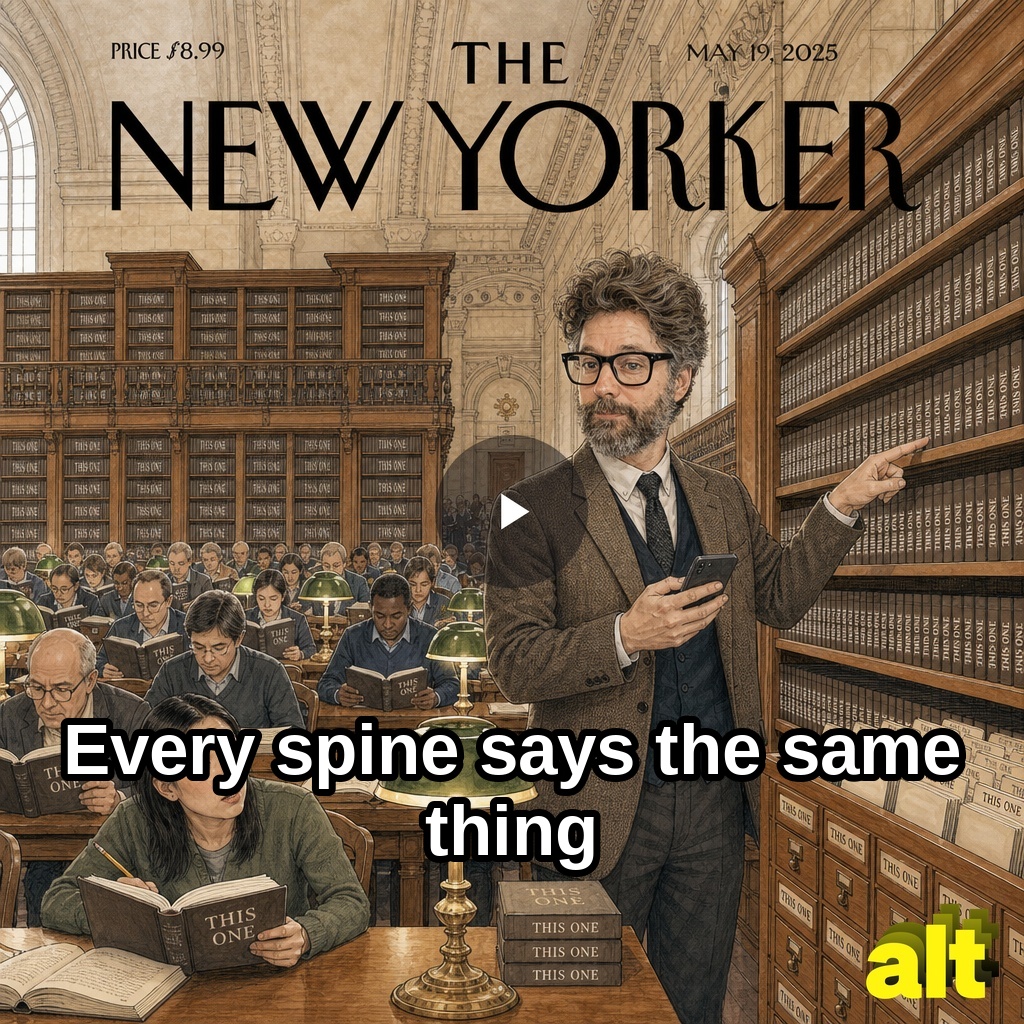
And since the whole point is showing, not telling — here’s that song from step 3. Press play:
You’re on the list. We’ll be in touch.
Or just email us: hello@alternate.app